What does a 30-year career in software look like? For me, it started with Soviet computers, continued through the early days of the web, JavaScript, Open Source, and modern frameworks, and has now arrived at the age of artificial intelligence.
I always fancied to write a book that would combine most of my programming experience gathered over two decades. Packtpub gave a chance that I embraced gratefully. And here we are, half a year of efforts paid off and my book is live
This book is for developers already familiar with JavaScript who want to level up to get the most out of the language. The book is practice–oriented and would be most helpful for those who is used to `learn by doing` as the topics are thoroughly covered with real-life examples and tutorials. This is an extract of a chapter not included in the book.
As you likely know, in addition to new syntax, HTML5 introduces powerful features and APIS that can be used with JavaScript. Some of them such as Web Storage, IndexDB, FileSystem, Workers, Custom Elements, HTML Imports, Shadow DOM and Templates we examine in the book. Here I want to share with you a few HTML5 API that you may not be even aware of. Nonetheless they may help you to improve UX in your web application significantly.
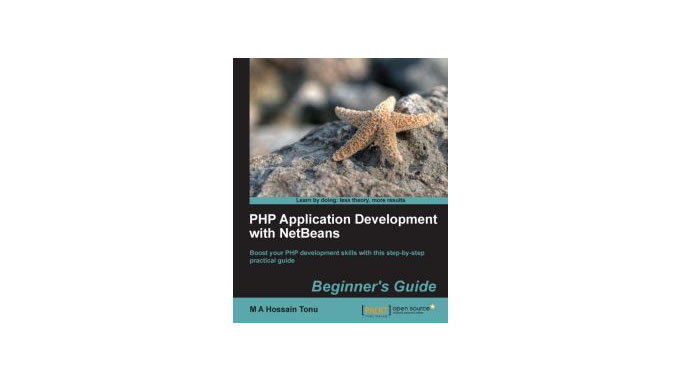
Recently Ive laid my hands on a copy of PHP Application Development with NetBeans by M A Hossain Tonu (www.PacktPub.com). It appeared to be a really nice reading. One of those where its hard to put the book down until the end. It must be valuable as for beginners as for experienced NetBeans users. I, personally, have been using NetBeans for about 4 years and still find in the book the features I wasnt aware about or unfairly ignored for so long. Yeah, NetBeans is like an iceberg. At the first glance it looks quite simple, but the deeper you are, the more layers you discover. After years of usage you still can run into an overlooked tool which remarkably boosts your coding productivity. In order to avoid the case Why didnt I use it for all this time?!, I would even call it as a must-read book for anybody working with NetBeans. Besides, covering the common facilities of NetBeas the books provides comprehensive input regarding automated-testing flow, version control integrated tools on Git example, PHPDoc practices and API-documentation generation.
A few months ago I bought a new Macbook. I’m really fond of the development environment I set up on it. The more I work with it, the more I love it. However, while building the environment I couldn’t find any decent step-by-step manual. So, it took me for a while to get what I wanted. Here’s my experience
I anticipate Google to swallow Review Services market using G+. I hate the idea of somebody having total control on everything, but when I buy a product (any product), I see number of variations from different producers. I want to read some reviews, to see some ratings on products and their producers before picking one. That’s natural. Where to get those? On the site of producer/seller? Oh, please! I would rather not trust them entirely. Well, I could try to search on www.consumersearch.com or try www.epinions.com, though I would hardly find many of the products sold in Germany and the reviews by the locals. I’ll tell you what, I’m going to end up extracting reviews on public forums and likely giving up after hours spent in vain. However, I can use Google Products (www.google.com/products) and find everything in the place. I may even make a photo of the product right on the shelf of the store and try googling by the picture.
Working with Drupal for half of year and constantly tuning it for better maintainability, code consistency I came to the idea – Drupal is going to be a toy, a pretty popular but only toy, unless they decide to rewrite everything from the scratch. Studying Drupal 7 I find the CMS wasn’t really refactored. They dramatically improved administrator panel, included CCK/ImageCache into the core, added file handlers and Unit-test framework. However it’s still a mess of coding styles and approaches. You can enter any module folder and you’ll find bunch files with no concern separation. View components, business logic, helpers, domain entities – all can be met in the same file. I understand that laying strict requirements on modules would affect the army of contributors. But anyway with Drupal 7 all the modules must be rewritten. Maybe the committee just can’t agree on a structuring strategy. As for me, it must be like that.
Let’s assume you have installed phpBB3 to run forums on the web-project you are working on. The forum system was re-skinned and your project manager, seems, is pretty happy for the first. But later he requests some changes, e.g. to prevent users from sending emails to each other within the board. This one is easy; you can disable it globally via ACP. However, the project manager wants only registered users not be able sending emails, when administrators and global moderators are still able to do it. Again, it is not a problem, because phpBB3 provides permissions roles which can be assigned to user groups. So, you go to ACP and create and a new role, e.g. ProjectX Registered User Features, based on existing one (All Features). Now you can set false ‘Can send e-mails’ option of Misc tab in User permissions panel and apply this role for all the registered users. Everything is fine so far, but only until the project manager requests something like ‘user search form in UCP has to be removed for unprivileged users’. You cannot find this feature in role options. We need custom option for user roles.
It is common to encounter success stories that begin with the words: “I’ve have been lucky in my life. I’ve made good friends and met like-minded people who have helped me from the beginning.
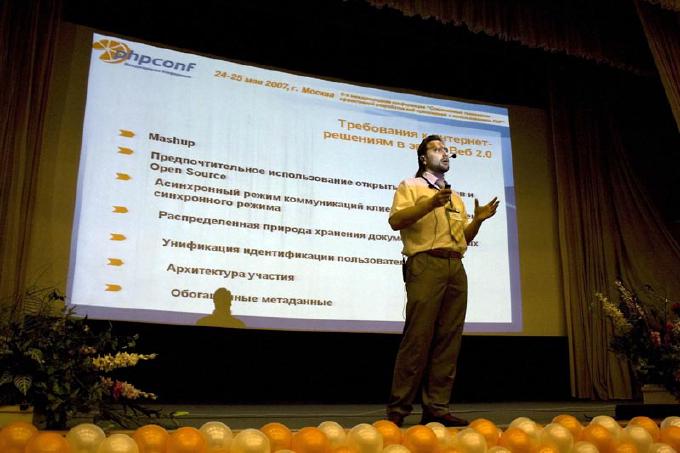
Opinions on the future of Web 2.0 differ, and sometimes a lot, but no one would argue that this concept in many ways shaped the present-day Internet. That is why we, developers, should follow new tendencies and trends on the market. Web 2.0 brings with it new requirements.
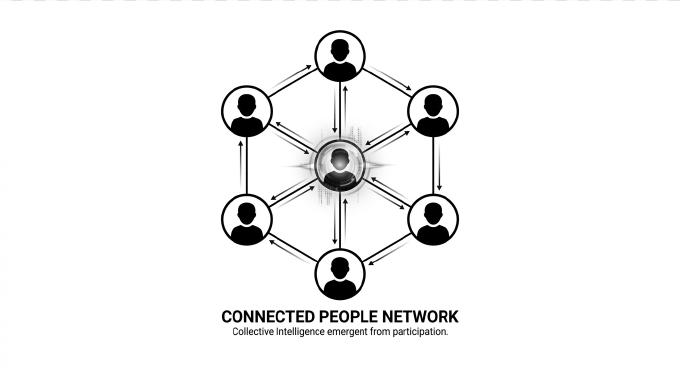
Today theres no lack of reports on successful Web 2.0 community projects. This is by no means surprising as the latest community projects provide advanced interactive experience for the audience while attracting impressive investments. This results in rapid growth within the market segment and businessmen rush in to get their share of the deal. The market now offers a huge number of solutions, and some of them seem to be of quite agreeable quality. Yet very few eventually amount to a success. Why is that?
Most web developers default to the same familiar deliverables: a brochure site, a catalog, an online store. But is that actually enough to build a real e-business? A look at what e-business covers, how Web 2.0 changed the picture, and why the Internet-as-platform model was always where things were heading.