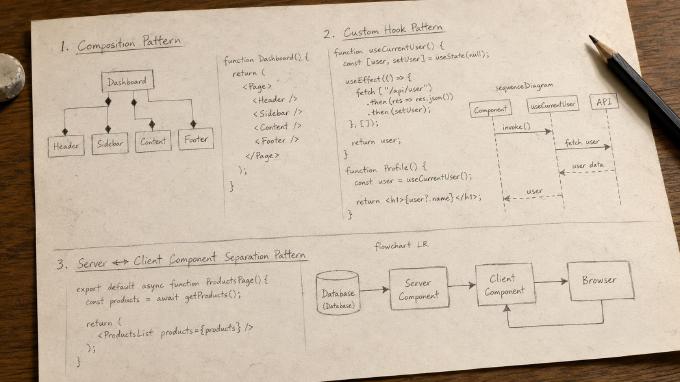
Master the six essential React design patterns that solve real problems in modern applications. From Composition and Custom Hooks to Providers, Compound Components, Server/Client Separation, and Suspense - each pattern includes real-world analogies, practical code examples, and visual diagrams.
Nowadays JavaScript evolves fast. We have ECMAScript 6th and 7th editions released over just 2 years. the current support of ES6 specification in major browsers is close to 100%. So the language changed, and changed for better. It has become more expressive, much more concise and readable. It is tempting to jump into, but what about older browsers? Transpilers can translate ES.Next into the old-good JavaScript of ECMAScript 5th edition.
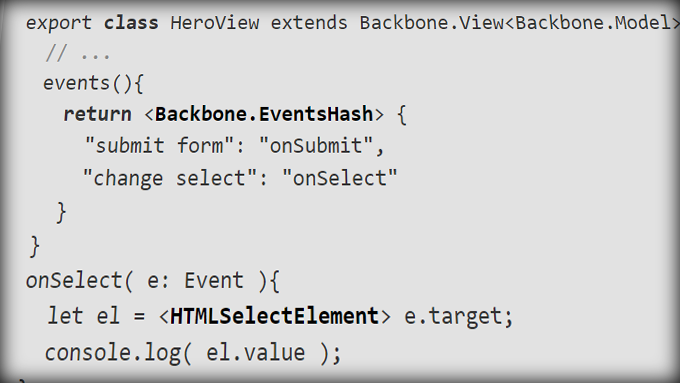
Then the question is which transpiler to pick up? Babel (https://babeljs.io/) is still on the rise, but look what is happening to TypeScript. Since it was chosen for Angular2 it is gaining its momentum. Why have they decided for TypeScript? Because its much more than transpiler. TypeScript enhances JavaScript with optional features such as static typing, interfaces, abstract classes, member visibility and more. Thats a completely new level, not available in plain JavaScript.
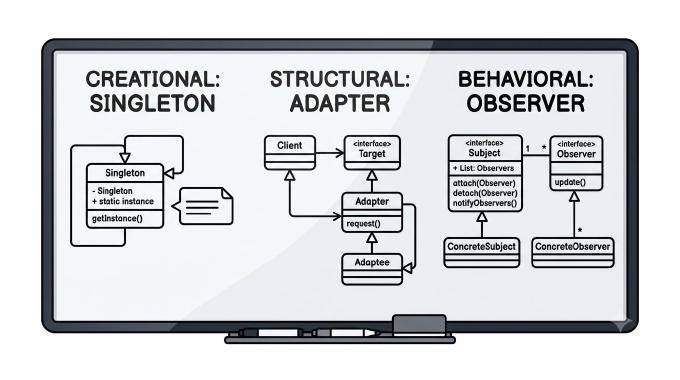
After having your project fully tested, deployed and running, it seems the application architecture is pretty good enough. All the requirements met and everybody is happy. But then as it happens, the requirements change and you, all of sudden, find yourself in the time of troubles. It comes out that some modules easier to hack than to modify. Change of other ones brings endless changes in a cascade of dependent modules. Or you change one module and whole the application starts to collapse like a house of cards. And, of course, you find out that you can’t reuse already written modules for the new tasks, because the encapsulation of the desired parts would take too much risk and work. Robert C. Martin was very accurate naming those symptoms of rotting design as Viscosity, Rigidity, Fragility and Immobility