Google Analytics in Your App: Unlock Insights Without Leaving Your Dashboard

API Integration
Google Analytics in Your App: Unlock Insights Without Leaving Your Dashboard
Image generated by DALL·E

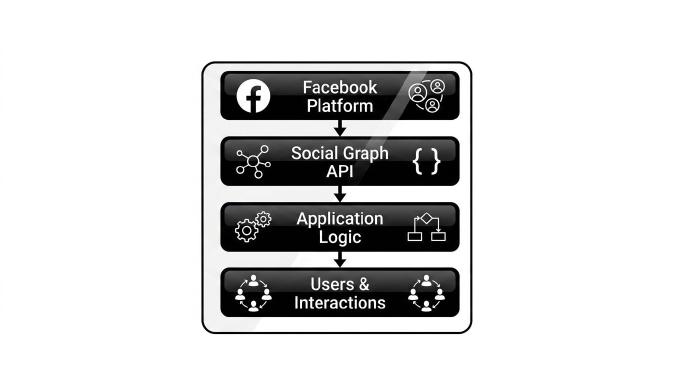
Reasonably statistic analyses belong to CMS ACP reports. So, CMS vendors tend to include some into their products. However, they often make statistical data collection and analysis a part of CMS. It usually gains some primitive reports and affects application performance. I believe any sound statistic analysis can be delivered only by a dedicated specialized application. Meantime CMS can be used to represent the reports prepared by that application. Have you ever fancied displaying Google Analytics Reports in your CMS?

Dependency Injection via Factory

Clean Code
Dependency Injection via Factory
Image generated by DALL·E

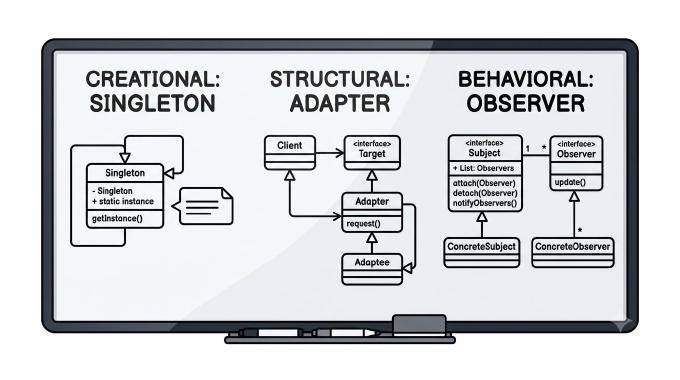
You know, when coupling is not loose, components depend too much on each other. It makes your entire architecture fragile and immobile. You can check how loose the coupling is by making a unit test for a component. If you have no problem substituting dependencies by e.g. mock objects then everything is ok. Let take a model class. It depends on DB connection, here Lib_Db_Adapter_Interface instance. We cannot just create DB adapter instance within model constructor, because it depends on configuration data which don’t belong to the model. We can pass to the model constructor a settings array with DB configuration data.

Design Patterns by PHP and JavaScript examples

Design Patterns
Design Patterns by PHP and JavaScript examples
Image generated by Gemini

After having your project fully tested, deployed and running, it seems the application architecture is pretty good enough. All the requirements met and everybody is happy. But then as it happens, the requirements change and you, all of sudden, find yourself in the time of troubles. It comes out that some modules easier to hack than to modify. Change of other ones brings endless changes in a cascade of dependent modules. Or you change one module and whole the application starts to collapse like a house of cards. And, of course, you find out that you can’t reuse already written modules for the new tasks, because the encapsulation of the desired parts would take too much risk and work. Robert C. Martin was very accurate naming those symptoms of rotting design as Viscosity, Rigidity, Fragility and Immobility

MVC on command line

Software Design PHP
MVC on command line
Image generated by DALL·E

If you work with Zend Framework, you likely tried ZF Console (Zend_Tool on command line). But have you tried to extend it? Why? To have common interface for all your Cli-scripts related to ZF-base project. How do you find the idea to program Cli-scripts in MVC? Zend Framework provides us with the tool to do it.


From Chaos to Control: Improving Your PHP Error Handling Workflow

Clean Code
From Chaos to Control: Improving Your PHP Error Handling Workflow
Image generated by DALL·E

However fondly you treat your application, errors happen and they happen often when it is being developed. That’s obvious you want to get all the tracing information during the development stage and something like ‘Application Error’ page if the error occurs on the production.

Everybody knows error handler can be set in PHP through set_error_handler. The same about exceptions for which set_exception_handler is used. But it really works only for user-defined errors and uncaught exceptions. It doesn’t affect any of fatal error for instance. Well, PHP has such stuff as register_shutdown_function to deal with them. We can create ErrorHandler class and subscribe the handlers in the beginning of the script

Anonymous Functions and Closures in PHP

PHP
Anonymous Functions and Closures in PHP
Image generated by DALL·E

If you are used to switch between JS and PHP programming, it obviously happened to you to miss some of JS flexibility in PHP. I felt it every time when declaring a callback function , being eager to apply something from JS like that...

Source Code Analysis: Code Sniffer

Developer Tools
Source Code Analysis: Code Sniffer
Image generated by DALL·E

In the previous article we examined the only way of code analysis – PHP tokinizer. But digging deeper you’ll find many of options. Well-known expert of the subject Sebasitan Bergmann points out following.

As far as you see, with such a set of tools you can do whatever you want. But here we are going to discuss the only application, which is known as code sniffing.

Ok, you have some team, working on the projects and, obviously, you have some code convention to adhere. The lead, making code review, checks the compliance with standards by sight. Common, tell me you are not fond of it. There is an amazing tool but again by Sebastian Bergmann so-called PHP CodeSniffer.

From Code to Content: Measuring Translation Coverage in Your Project

Developer Tools PHP
From Code to Content: Measuring Translation Coverage in Your Project
Image generated by DALL·E

Let’s assume our application has a UI translation module. We created dictionary and use terms from there within the code of application components. Everything is clear so far. But one day we begin to suspect that not all of the terms presented in the dictionary are really used within the application. Besides, probably some of terms which are used in components are not available in the dictionary. So we need a script to traverse all the source code files searching translation module use occurrences. Having the list of all encountered terms the script can compare it with the terms of the dictionary.


Sapid CMF reload

CMS
Sapid CMF reload
Image generated by Gemini

Eventually I reincarnated my personal site using alpha version of Sapid CMF 2. I’m still in progress refining the CMS release, but actually the only what I brought from old version is its name. So, what is going to be?

Aspect-oriented Software Development and PHP

Software Design
Aspect-oriented Software Development and PHP
Image generated by ChatGPT

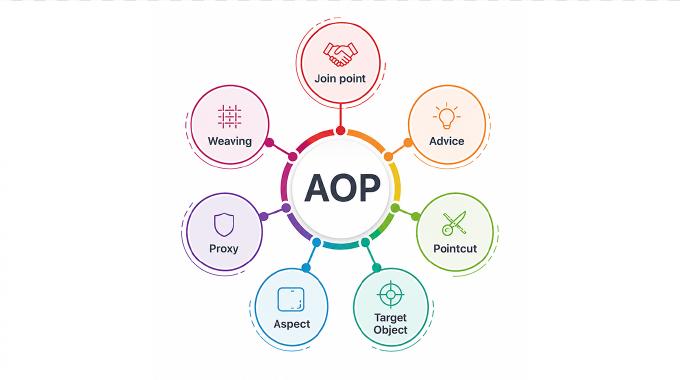
Aspect Oriented Software Development (AOSD) is a methodology meant to implement new aspects in software component using external components, but without altering the code that implements the core functionality.

The AOSD concept was applied originally by Java developers. They developed a compiler that implements the AOP (Aspect-Oriented Programming, an implementation of AOSD) white box approach, i.e. the compiler the merges the code that implements the software components core functionality with the necessary code alterations to implement the new aspects where necessary.

This paper provides an introduction into the paradigm of aspect-oriented software development (AOSD). It includes a multitude of practical examples, provided with a view to objectify such abstract approach as AOSD, as well as to help the reader easily grasp its essence and advantages. The paper is primarily intended for programmers working with PHP. Its aim is to demonstrate a way of applying AOSD in PHP-based projects already today.


Interactive Grid with Your Own Hands

JavaScript
Interactive Grid with Your Own Hands
Image generated by DALL·E

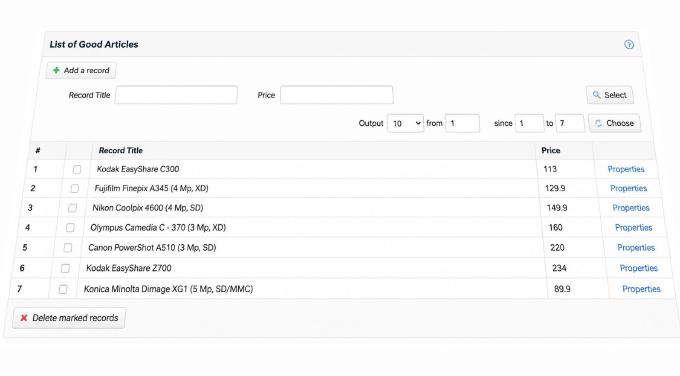
Users coming from desktop apps tend to find web application interfaces frustrating. With AJAX, there is no good reason for that. This article walks through building an interactive data grid with sorting, filtering, and pagination, all without reloading the page.